How to Tell If Your Wood Fence Needs Repair Before Winter
Signs Your Wood Fence Needs Repair Before Winter
Loose posts, rotting boards, leaning panels, and gates that no longer close correctly are clear signs that your wood fence may need repair before winter. Fixing these problems early can help prevent moisture, freezing temperatures, snow, and strong winds from making the damage worse.
A careful fall inspection does not require special equipment. Walk both sides of the fence, test any areas that feel unstable, and look closely at the places where wood meets soil or collects water. Pay particular attention to posts, rails, fasteners, gates, and the protective finish. The goal is to find small problems while they can still be addressed with focused repairs.
Check Posts, Panels, and Gates for Movement
A stable fence should remain firm when you apply light pressure. If a post shifts at ground level or an entire section moves more than expected, the post may be loose, damaged, or surrounded by eroded soil. Leaning panels can also indicate weakened posts or connections that are no longer holding properly.
Winter weather can place additional stress on an unstable fence. Moisture in the ground may freeze and expand, while wind and heavy snow can push against sections that are already leaning. A loose post that seems manageable in fall may allow several connected panels to sag or pull apart during the winter.
Open and close every gate during your inspection. A gate that drags, sags, sticks, or fails to latch may have loose hinges, a shifting post, or a frame that has moved out of square. Tightening hardware may solve a minor problem, but damaged wood or an unstable gatepost usually calls for a more complete repair.
Missing boards and exposed nails or screws should also be corrected promptly. These issues can create safety concerns and leave neighboring boards with less structural support. Replacing a few damaged components before winter is generally more practical than waiting for the problem to spread.
Look for Rot, Soft Spots, and Split Wood
Wood rot often develops where moisture remains trapped. Check the bottoms of posts, the ends of rails, areas beneath peeling finishes, and any section that stays shaded or damp. Dark discoloration, crumbling fibers, softness, and a musty appearance can all indicate moisture damage.
You can gently press suspicious areas with a screwdriver or another blunt tool. Healthy wood should feel solid. If the surface gives way easily, flakes apart, or feels spongy, the damage may extend below what you can see. A professional inspection can help determine whether the affected board or post can be replaced individually.
Cracks and splits deserve attention as well. A small surface check may not affect the fence immediately, but a deep split can weaken a board and provide an opening for water. Repeated freezing and thawing may widen that opening over time.
Inspect the fence finish while looking for damaged wood. Faded color alone does not necessarily mean the fence needs structural repair, but peeling stain, exposed grain, and water that quickly soaks into the surface suggest that the wood has lost some protection. Maintenance may be enough when the fence is still sound, while soft or deteriorated sections should be repaired first.
Decide Between Fence Repair and Replacement
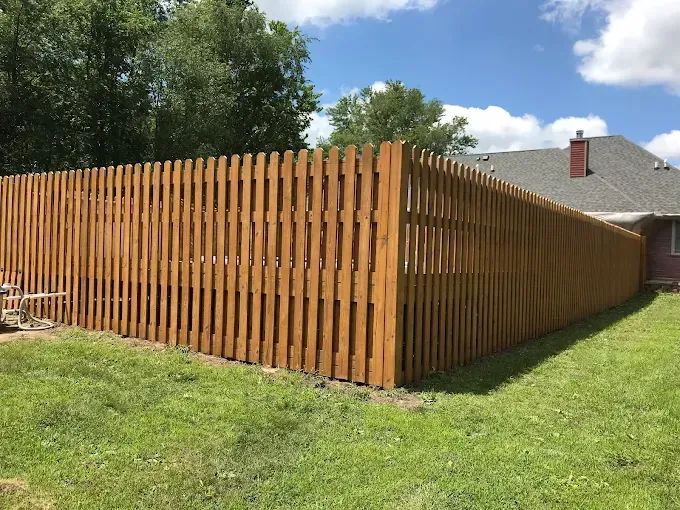
Fence repair is often appropriate when damage is limited to a few boards, one gate, a short rail, or an isolated post. Targeted repairs can restore stability and appearance without removing sections that remain in good condition. This approach is especially useful when the fence is otherwise straight, secure, and structurally sound.
Replacement becomes more practical when rot affects many posts, long sections lean, repeated repairs are failing, or the fence no longer provides the privacy or security you need. Widespread damage may indicate that the materials have reached the end of their useful life rather than suffered one isolated problem.
Compare the damaged area with the condition of the fence as a whole. If one section needs attention while the rest remains solid, repair may be the sensible choice. If every inspection reveals another weak point, continuing to replace individual pieces can become less efficient.
A new fence installation also gives you the opportunity to reconsider the layout, height, material, and style. Protect Your Deck can help you evaluate repair, replacement, and installation options without assuming that every damaged fence needs to be completely rebuilt.
Prepare Your Fence for an Illinois Winter
Fall repairs should focus on keeping the fence stable and limiting further moisture exposure. Replace damaged boards, secure loose hardware, correct unstable posts, and address gate problems before frozen ground makes the work more difficult. Structural repairs should come before washing, sealing, or staining.
Keep leaves, soil, and other debris from building up against the bottom of the fence. Organic material can hold moisture against the wood, especially in areas with limited sunlight or airflow. Trimming nearby vegetation can also make it easier to inspect the fence and identify changes during the season.
Protect Your Deck serves properties throughout Kankakee, Bourbonnais, Bradley, and Manteno. Conditions can vary from one property to another, but the same basic rule applies throughout the area: repairing an unstable or deteriorated fence before winter reduces the chance that seasonal weather will turn a manageable issue into more extensive damage.
Once repairs are complete, appropriate cleaning and finishing can help protect sound wood. The fence should be clean and dry before a protective product is applied, and the work needs to be scheduled around suitable weather conditions. If the season is already too cold or wet for finishing, structural concerns should still be addressed rather than postponed automatically.
Get a Free Fence Repair Estimate Before Winter in Bourbonnais, IL
Protect Your Deck can inspect your wood fence, explain which areas need attention, and help you compare repair with replacement. With more than 15 years of experience, our licensed, bonded, and insured company provides custom fence work backed by a workmanship guarantee upon completion.
Addressing fence damage before winter can protect your property, preserve usable sections, and give you greater confidence when harsh weather arrives. Contact Protect Your Deck to request a free estimate for your fence repair, replacement, or installation in Kankakee, Bourbonnais, Bradley, or Manteno.