Choosing the Right Fence Material for a Large Yard
Selecting the Right Fence Material for Large Properties
The fence material that makes sense for a small suburban backyard does not automatically make sense for a large yard. Scale changes the calculation in significant ways. More linear footage means higher total material cost, more surface area requiring maintenance, more exposure to wind loads across long panel runs, and a longer installation timeline. Getting the material right before installation begins matters more on a large property than on a small one, because the consequences of a poor choice are proportionally larger.
Here is a breakdown of the main fence material options and how each one performs when the yard is large.
Pressure-Treated Wood: The Practical Starting Point
Pressure-treated wood is the most common fence material for a reason. It is widely available, cost-effective on a per-linear-foot basis, and straightforward to install. For a large yard where total cost is a real consideration, treated wood typically offers the lowest entry point across the full perimeter.
The trade-off is maintenance. Treated wood requires periodic staining or sealing to protect it from moisture, UV exposure, and the freeze-thaw cycles that are a consistent factor in Kankakee County winters. Over the life of the fence, those maintenance costs accumulate, and on a large yard, the surface area involved in a proper stain or seal job is significant. The fence also grays and weathers if left untreated, which affects curb appeal over time.
For large yards where budget is the primary driver and the owner is comfortable with periodic maintenance, treated wood is a solid choice. For those who want to minimize the ongoing work that comes with a large perimeter, other materials deserve consideration.
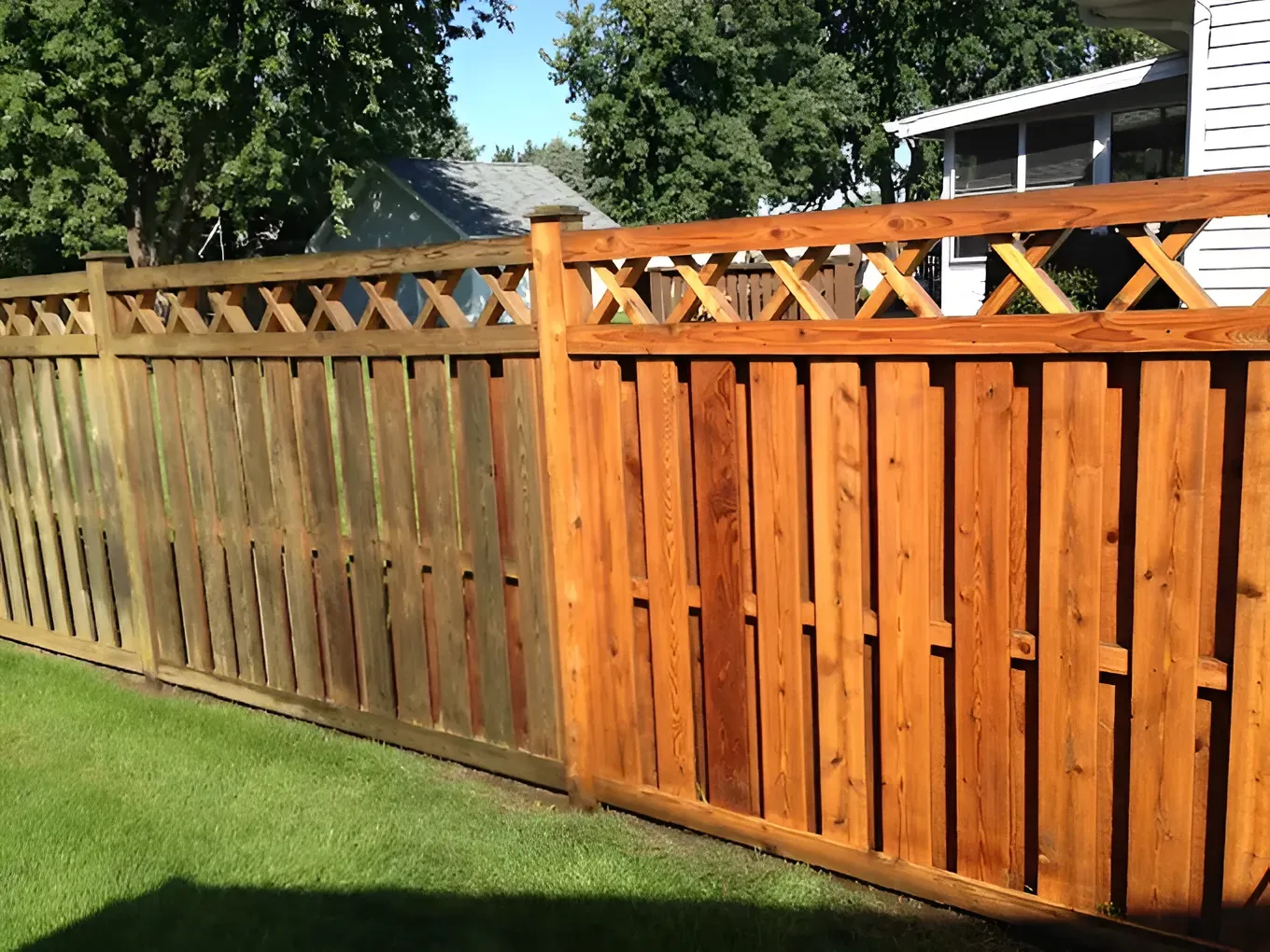
Cedar: The Premium Wood Option
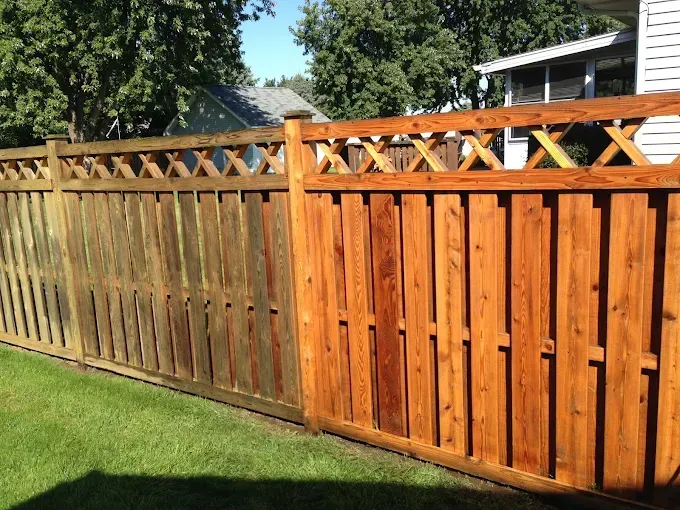
Cedar is a natural upgrade from treated wood for homeowners who want the look and warmth of a wood fence without some of the maintenance burden. Cedar is naturally resistant to moisture, rot, and insects, which makes it better suited to the Illinois climate than treated wood without chemical preservatives.
The grain and color of cedar also produce a more finished appearance, which matters on a large yard where the fence becomes a defining visual element of the property. The initial cost is higher than treated wood, but the reduced maintenance frequency over the fence’s lifespan narrows that gap over time.
Cedar still benefits from periodic staining or sealing to preserve its color and extend its life. Left untreated, cedar weathers to a silver-gray that some homeowners find attractive and others do not. Either way, cedar holds up well in the Kankakee County climate and delivers a natural, high-quality appearance that adds to the overall character of a larger property.
Vinyl & PVC: Low Maintenance Across a Long Perimeter
Vinyl and PVC fencing is where the low-maintenance argument becomes most compelling for large yard owners. There is no painting, staining, sealing, or treating. The color is consistent throughout the material, which means scratches and minor surface damage do not expose a different layer underneath. Cleaning is typically done with a garden hose.
On a large yard, those maintenance savings are significant over time. A wood fence perimeter of several hundred feet requires a full day’s work for a proper stain job every few years. A vinyl fence of the same length requires a fraction of that effort.
The upfront cost of vinyl is higher than wood, and the appearance is cleaner and more uniform than wood grain, which is a preference call. Vinyl is available in multiple styles, including privacy, picket, and post-and-rail, and comes in a range of colors to match the home’s exterior. For large yards where the ongoing maintenance burden of wood is a genuine concern, vinyl is often the practical long-term choice.
Chain Link: The Functional Perimeter Solution
For large yards where function matters more than aesthetics, chain link is the most cost-effective material available. It is fast to install across long perimeters, holds up well in Illinois weather conditions with minimal maintenance, and is available in vinyl-coated versions that add color options and a softer appearance than galvanized steel.
Chain link is a common choice for rural properties, large residential lots where containment of pets or defining property boundaries is the primary goal, and properties where the fence will be partially hidden by landscaping. It is not typically chosen for its visual appeal as a standalone element, but in a large yard context where the fence runs along a property line that is not a focal point, it delivers reliable performance at a price that is difficult to match.
Wrought Iron & Aluminum: Statement Fencing for Larger Properties
Wrought iron and aluminum fencing bring a different character to a large yard than wood or vinyl. They are inherently more decorative, open in design, and better suited to formal landscapes, larger residential properties where the fence is meant to be seen, and applications where security and visibility need to coexist.
Wrought iron is heavy, durable, and carries a traditional aesthetic that suits certain property styles particularly well. It requires maintenance to prevent rust and should be inspected and touched up periodically to maintain its finish. Aluminum provides a similar decorative appearance with significantly less maintenance since it does not rust. Both options involve a higher material cost than wood or vinyl, but they deliver a distinctive look that has genuine curb appeal on the right property.
Protect Your Deck installs wrought iron and custom stone and aluminum fencing throughout Kankakee County for homeowners who want a fence that creates a real impression. That combination of materials—stone pillars or posts with iron or aluminum infill panels—is one of the more distinctive options available for a large property that wants to make a statement.
How Illinois Weather Factors Into the Decision
Kankakee County’s climate creates specific stress on outdoor structures. Cold winters with multiple freeze-thaw cycles put pressure on posts and footings. Spring rain is heavy and sustained. Summer heat and UV exposure affect how materials age visually. And the wind across the Illinois plains is a consistent load on any fence panel that catches it.
Wood is most vulnerable to the moisture cycle, requiring the most active management to stay in good condition. Vinyl holds up well to temperature swings but can become brittle in extreme cold over time if product quality is low. Wrought iron holds up to structural demands but needs rust management. Aluminum and chain link are among the most weather-resistant options in the Illinois climate.
Post depth and concrete footing size matter more on a large fence in a windy corridor than on a small backyard fence. Protect Your Deck accounts for those installation variables on every large yard project to ensure the fence performs across Illinois seasons rather than just looking good on the day it is installed.
Fence Installation for Large Yards in Kankakee, IL & Surrounding Areas
Protect Your Deck has been serving
Kankakee,
Bourbonnais,
Manteno,
Bradley, and the surrounding counties for over 15 years with
fence installation across all major material types. Our team is licensed, bonded, and insured, and every project comes with a free estimate and a guarantee on all completed work. Whether the goal is a low-maintenance vinyl perimeter, a cedar privacy fence, or something that adds genuine curb appeal and character to a larger property, Protect Your Deck brings the craftsmanship to make it happen.
Contact Protect Your Deck today for a free estimate on your large yard fence installation in Kankakee County.