What Causes Deck Boards to Crack, Warp, or Rot?
Common Causes of Deck Board Damage
Deck boards crack, warp, and rot for the same underlying reason: they're wood exposed to Illinois weather year-round, and moisture, sun, and temperature swings all attack the material in different ways. Rot comes from prolonged moisture exposure, whether that's rain sitting on the surface, snowmelt seeping into the grain, or boards sitting too close to the ground without enough airflow underneath to dry out between storms. Decks built with too little clearance between the joists and the ground, or with landscaping and mulch piled up against the structure, trap moisture against the wood longer than a properly ventilated deck ever would. Once water gets past a board's protective sealant or stain and soaks into the wood fibers, it creates the damp conditions that fungal decay needs to take hold. Once rot sets in, it spreads rather than staying isolated to one spot.
What Causes Deck Boards to Crack or Warp?
Cracking and warping come from a different kind of stress: movement rather than decay. Illinois summers bake deck boards under direct sun, drying out the wood fibers and making them brittle, while Illinois winters put the same boards through repeated freeze-thaw cycles that expand and contract the wood over and over. That constant swing between wet and dry, hot and cold, is harder on a deck than steady weather in either direction would be. Warping specifically tends to happen when one side of a board absorbs more moisture than the other, commonly the underside facing the ground versus the top facing the sun, which causes the board to cup or twist as it dries unevenly. Boards installed too tightly together, without enough gap to expand and contract naturally, are especially prone to this kind of movement over time.
Does Your Deck's Material Affect How It Cracks or Rots?
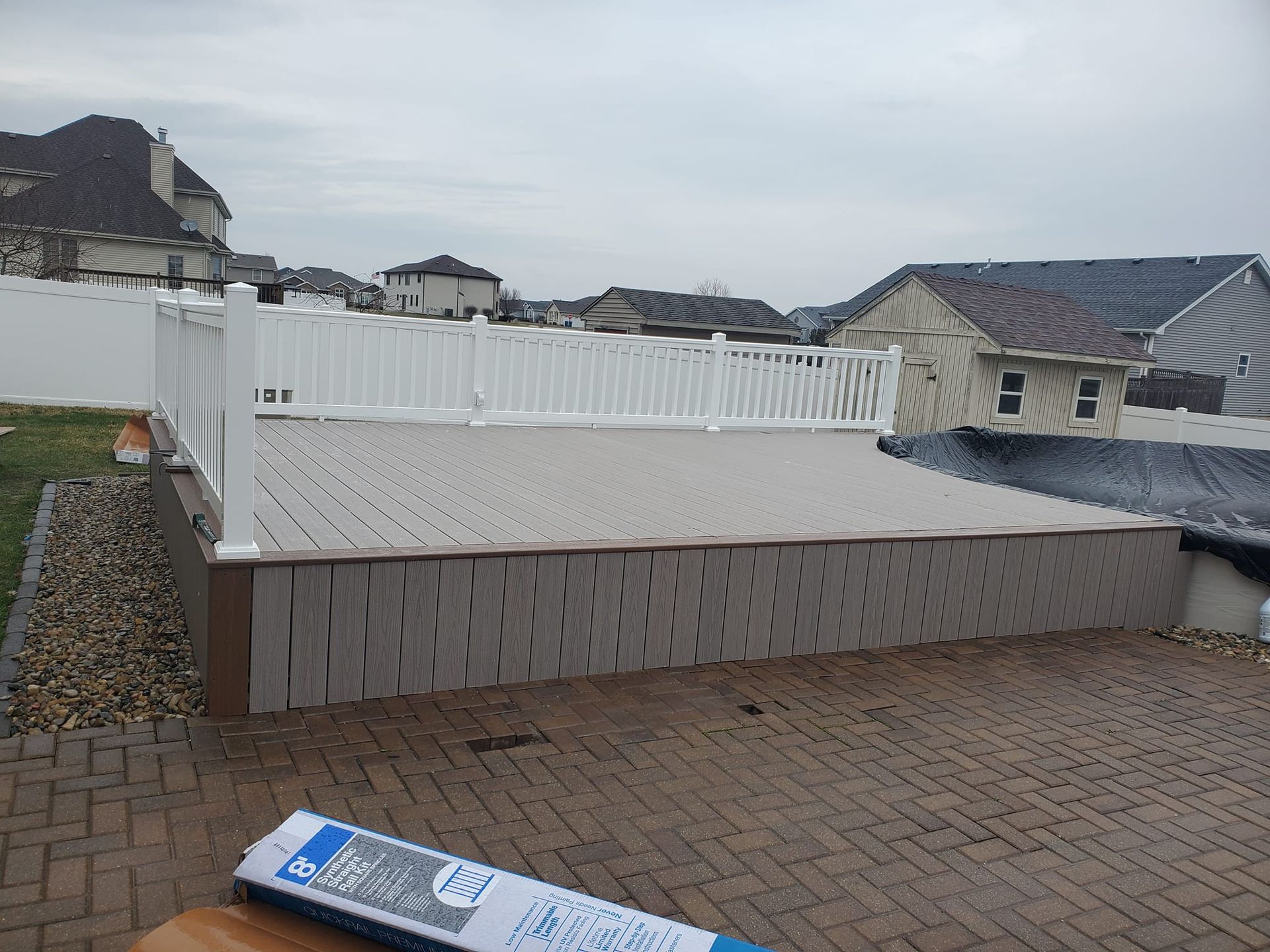
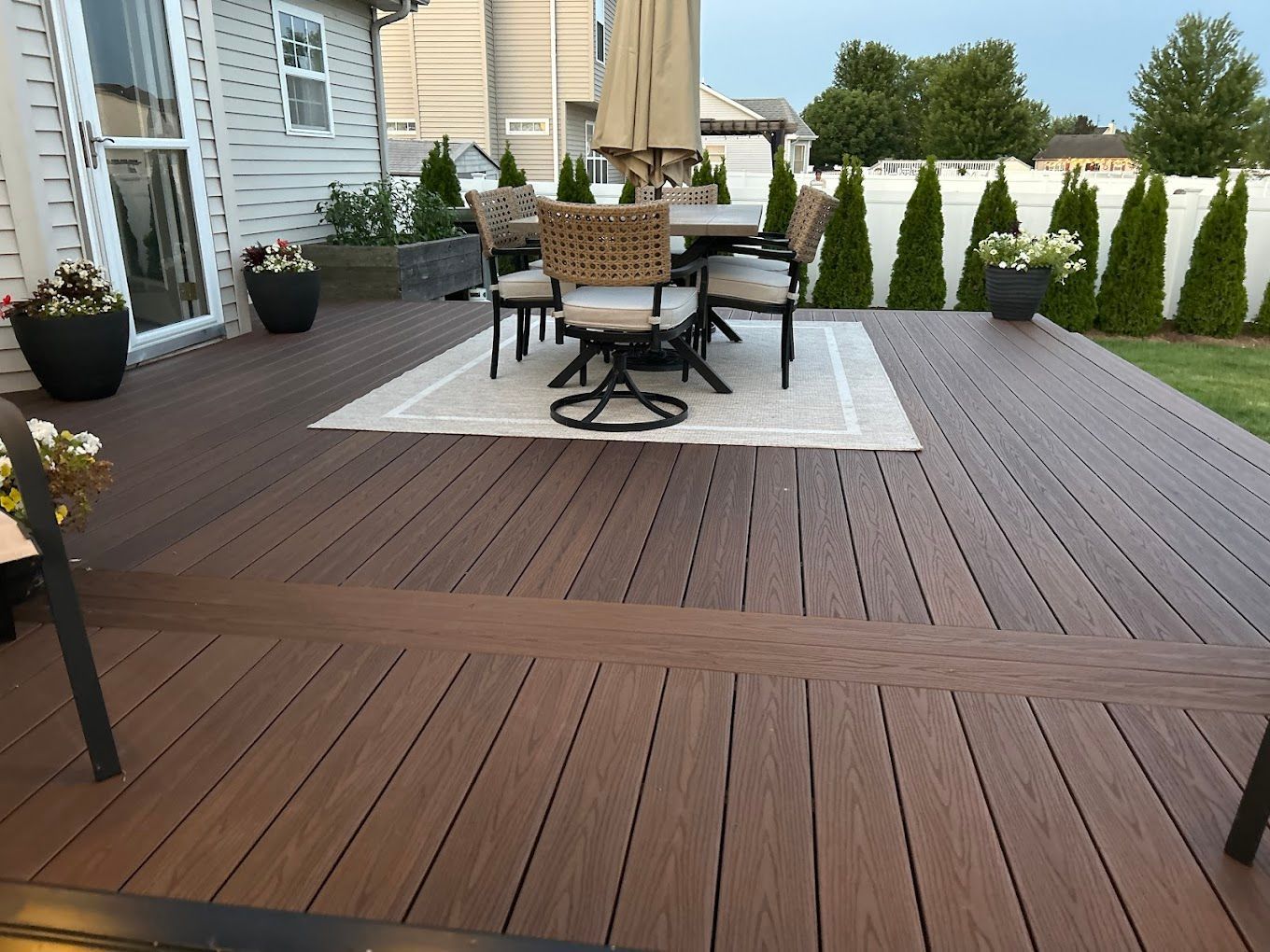
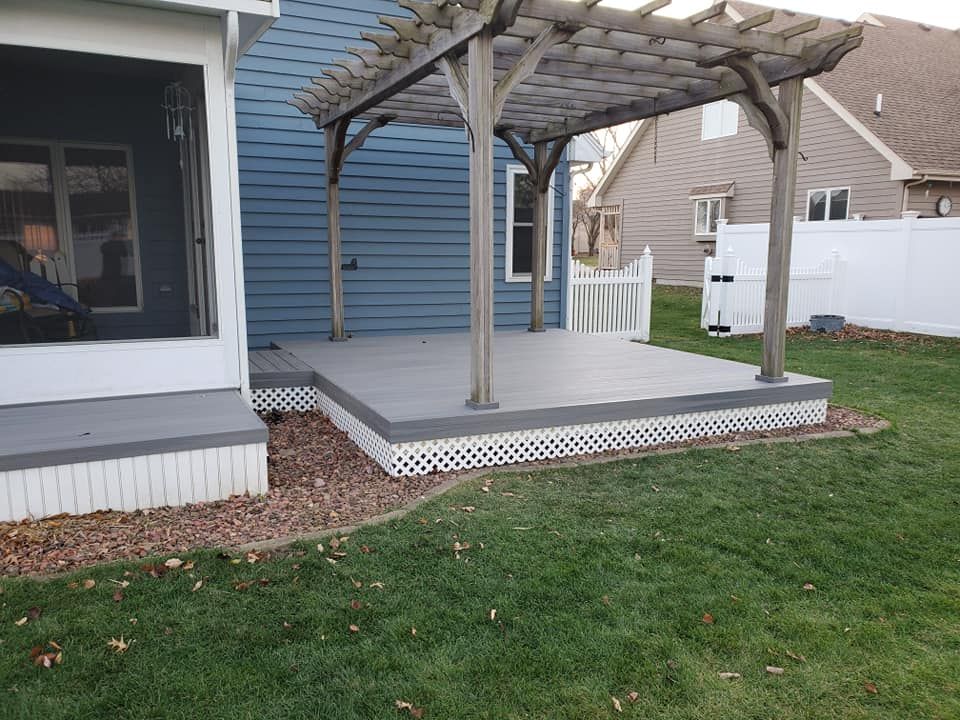
Material choice affects how much of this a deck actually has to fight off. Pressure-treated wood and cedar are both popular, affordable options, but they need regular sealing or staining to hold up against Illinois moisture and sun exposure, and skipping that maintenance is one of the fastest ways to end up with cracked, rotted boards within just a few seasons. Composite decking, including brands like Trex, resists rot and moisture absorption far better because it doesn't have the same wood grain structure to soak up water, though it isn't entirely immune to heat-related expansion and contraction. Whichever material a deck is built from, the boards perform best when they get the maintenance that material actually needs.
How Staining & Power Washing Prevent Deck Damage
This is exactly where staining and power washing earn their place as more than cosmetic services. A proper cleaning removes the dirt, mildew, and organic buildup that trap moisture against the wood surface, and a fresh coat of stain or sealant restores the protective barrier that keeps rain and sun from reaching the wood fibers directly. Protect Your Deck offers both services specifically because they're cost-effective ways to prevent the damage that eventually requires board replacement. Staining a deck every couple of years costs far less than replacing boards that were left unprotected long enough to rot or crack through.
How Often Should a Deck Be Stained or Sealed?
How often that maintenance needs to happen depends on the material and how much sun and foot traffic the deck sees. Pressure-treated wood generally needs restaining every 1 to 3 years, while cedar can sometimes stretch a bit longer thanks to its natural resistance to rot and insects, though it still needs regular sealing to hold that resistance over time. A deck that gets full sun most of the day or sits low to the ground and stays damp longer after rain will need attention on the shorter end of that range. Composite decking doesn't need staining at all, but it still benefits from regular power washing to keep mildew and debris from building up on the surface.
Repair or Replace: How to Know Which Your Deck Needs
Even with regular maintenance, boards eventually show signs that go beyond what a cleaning or fresh stain can fix. Rotted or visibly cracked boards, loose railings or stairs, damaged posts or footings, and warped planks that create an uneven walking surface are all signs it's time for a repair rather than another round of maintenance. A handful of damaged boards scattered across an otherwise solid deck is usually a straightforward repair, replacing just those sections rather than the whole structure. Widespread rot, soft spots throughout the decking, or structural issues at multiple posts and footings point to a bigger problem that a spot repair won't fully solve, and that's when a fuller replacement starts to make more sense than repeated patchwork. Catching these issues early keeps a manageable repair from turning into a full deck replacement, which is why Protect Your Deck starts every job with a thorough inspection rather than assuming the visible damage tells the whole story.
Deck Repair & Maintenance in Kankakee, IL & the Surrounding Areas
Protect Your Deck has served Kankakee, Bourbonnais, Manteno, and Watseka for over 15 years, providing deck construction, repair, staining, and power washing. Contact our team today for a free estimate if your deck is showing signs of cracking, warping, or rot.